

Energy Drinks Market Size to Hit USD 179.5 Billion by 2035 at 7.7% CAGR Worldwide
Energy Drinks Market
Energy Drinks Market Poised for Strong Growth Driven by Functional Beverage Innovation, Health-Conscious Consumption, and Expanding E-Commerce Channels
Health-conscious formulations, expanding e-commerce channels, and targeted innovation are reshaping the global energy drinks market and creating significant long-term growth opportunities.”
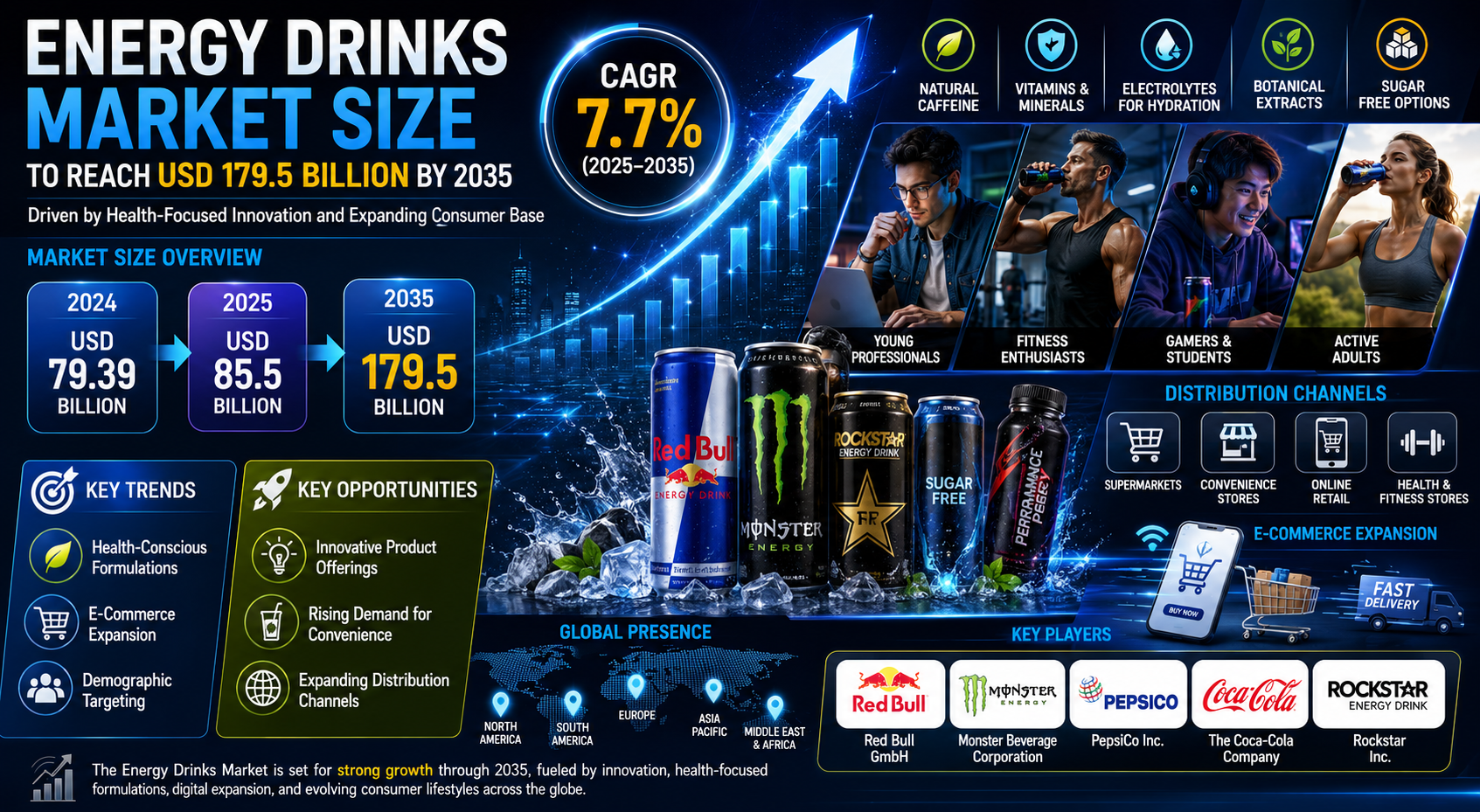
NEW YORK, NY, UNITED STATES, June 19, 2026 /EINPresswire.com/ -- The global Energy Drinks Market is experiencing substantial growth as consumers increasingly seek convenient beverages that support active lifestyles, physical performance, mental alertness, and overall wellness. According to the latest industry analysis, the Energy Drinks Market was valued at USD 79.39 billion in 2024 and is projected to grow from USD 85.5 billion in 2025 to USD 179.5 billion by 2035, registering a compound annual growth rate (CAGR) of 7.7% during the forecast period from 2025 to 2035.— Market Research Future (MRFR)
The market's expansion is being fueled by evolving consumer preferences, growing urbanization, rising disposable incomes, and increasing demand for functional beverages that provide energy enhancement, cognitive support, and performance benefits. As consumers become more health-conscious, manufacturers are introducing innovative formulations that balance energy-boosting properties with improved nutritional profiles.
Energy drinks have evolved significantly over the past decade. Once primarily associated with athletes and extreme sports enthusiasts, these beverages are now consumed by a broad demographic that includes students, professionals, fitness enthusiasts, gamers, shift workers, and individuals seeking convenient energy solutions throughout their daily routines.
The industry is witnessing increased innovation in ingredients, packaging formats, flavor profiles, and marketing strategies as brands compete to attract diverse consumer segments while adapting to changing health and wellness expectations.
Rising Demand for Functional Beverages Accelerating Market Growth
Consumers increasingly view beverages as functional products capable of delivering benefits beyond basic hydration. Energy drinks are positioned at the intersection of convenience, performance, and wellness, making them attractive to a wide range of consumers seeking enhanced productivity and energy management.
The growing pace of modern lifestyles has created strong demand for products that support mental focus, physical endurance, and sustained energy levels. Long working hours, demanding academic schedules, active fitness routines, and increased participation in recreational activities are contributing to the popularity of energy drinks worldwide.
Manufacturers continue to enhance product formulations by incorporating ingredients such as vitamins, amino acids, natural caffeine sources, electrolytes, botanical extracts, and adaptogens. These additions help differentiate products while addressing consumer demand for functional benefits that extend beyond traditional energy enhancement.
The increasing integration of health-focused ingredients is transforming consumer perceptions of energy drinks and expanding their appeal across broader demographic groups.
Get Full PDF Sample Copy of Report: (Including Full TOC, List of Tables & Figures, Chart) @ https://www.marketresearchfuture.com/sample_request/1916
Health-Conscious Formulations Emerging as a Key Industry Trend
One of the most influential trends shaping the energy drinks market is the growing emphasis on health-conscious formulations. Consumers are becoming increasingly aware of ingredient quality, sugar content, calorie levels, and overall nutritional value when selecting beverages.
This shift is encouraging manufacturers to develop products that align with healthier lifestyle preferences. Reduced-sugar, sugar-free, organic, plant-based, and naturally caffeinated energy drinks are gaining popularity across multiple consumer segments.
Brands are reformulating existing products while launching new offerings designed to address concerns regarding excessive sugar consumption and artificial ingredients. Natural sweeteners, botanical ingredients, and clean-label formulations are becoming increasingly common throughout the industry.
Health-conscious consumers are seeking products that provide energy support without compromising long-term wellness goals. As a result, manufacturers are investing heavily in research and development initiatives focused on ingredient transparency and nutritional optimization.
The trend toward healthier formulations is expected to remain a major driver of market growth throughout the forecast period.
E-Commerce Expansion Transforming Product Accessibility
The rapid growth of e-commerce platforms is significantly influencing the energy drinks market by improving product accessibility and expanding consumer choice.
Online retail channels provide consumers with convenient access to a diverse range of products, including premium brands, specialty formulations, limited-edition offerings, and subscription-based purchasing options. Digital platforms also allow manufacturers to engage directly with consumers and gather valuable insights regarding purchasing behavior.
The increasing adoption of mobile commerce, digital payment systems, and home delivery services has accelerated online sales across the beverage industry. Consumers are increasingly purchasing energy drinks through e-commerce channels due to convenience, competitive pricing, and expanded product availability.
Direct-to-consumer business models are enabling brands to strengthen customer relationships while reducing dependence on traditional retail channels. Personalized marketing campaigns, subscription services, and targeted promotions are further supporting online sales growth.
As digital retail infrastructure continues to improve globally, e-commerce is expected to become an increasingly important distribution channel for energy drink manufacturers.
Demographic Targeting Driving Strategic Innovation
Energy drink manufacturers are increasingly adopting demographic-specific marketing and product development strategies to address the unique preferences of various consumer groups.
Teenagers and young adults remain significant consumer segments due to their active lifestyles, academic demands, gaming interests, and social engagement. Marketing campaigns targeting these demographics often emphasize performance, excitement, convenience, and brand identity.
At the same time, middle-aged consumers are becoming an increasingly important growth segment. Many individuals within this demographic seek products that support busy professional schedules, fitness goals, and overall productivity.
Fitness enthusiasts represent another key target audience. These consumers often prioritize products containing functional ingredients, electrolytes, amino acids, and performance-enhancing nutrients that complement exercise routines and recovery objectives.
Manufacturers are leveraging consumer data analytics to create highly targeted product offerings, advertising campaigns, and retail strategies designed to maximize engagement and brand loyalty across diverse demographic groups.
Product Innovation Creating Significant Growth Opportunities
Continuous innovation remains one of the most important growth opportunities within the global energy drinks market.
Manufacturers are expanding product portfolios by introducing new flavors, ingredient combinations, packaging designs, and functional benefits. Innovation efforts focus on improving taste, enhancing nutritional profiles, and addressing emerging consumer trends.
Products featuring natural caffeine sources, adaptogenic herbs, vitamins, minerals, probiotics, and plant-based ingredients are attracting increasing consumer interest. Functional beverages that combine energy support with hydration, immunity enhancement, cognitive performance, and recovery benefits are becoming more prevalent.
The growing popularity of personalized nutrition also presents opportunities for brands to develop products tailored to specific consumer needs and lifestyle preferences.
Companies that successfully combine innovation, convenience, health benefits, and strong brand positioning are expected to capture significant market share throughout the forecast period.
Convenience Culture Supporting Market Expansion
Convenience remains a central factor influencing consumer purchasing decisions within the beverage industry.
Busy lifestyles and increasing workforce participation are driving demand for ready-to-consume products that deliver immediate functionality without requiring preparation. Energy drinks provide an efficient solution for consumers seeking rapid energy support during work, travel, exercise, study sessions, or recreational activities.
Portable packaging formats such as cans, bottles, and pouches enhance product accessibility and support consumption in various environments. Manufacturers continue to invest in packaging innovations that improve convenience while maintaining product quality and sustainability.
The rising popularity of convenience-oriented consumption patterns is expected to remain a key contributor to long-term market growth.
Market Segmentation Analysis
The global energy drinks market demonstrates a highly diversified structure, with growth being driven by evolving consumer preferences, product innovation, and expanding retail accessibility. Manufacturers are increasingly tailoring products to specific lifestyle requirements, health goals, and consumption occasions, resulting in a broader range of offerings across multiple segments.
By Product Type
Standard energy drinks continue to account for a substantial share of global consumption due to widespread availability, strong brand recognition, and established consumer loyalty. These beverages typically contain caffeine, taurine, B vitamins, and sugars designed to provide immediate energy and alertness. Their popularity remains particularly strong among students, professionals, gamers, and consumers seeking quick energy boosts during daily activities.
Organic energy drinks are gaining momentum as consumers increasingly prioritize natural ingredients and clean-label formulations. This segment benefits from growing demand for products perceived as healthier alternatives to conventional beverages. Manufacturers are incorporating organic caffeine sources such as green tea extract, guarana, yerba mate, and organic fruit concentrates to appeal to health-conscious consumers. The segment is expected to witness robust growth as awareness regarding ingredient transparency continues to increase.
Sugar-free energy drinks represent one of the fastest-growing segments within the market. Rising concerns regarding obesity, diabetes, and excessive sugar intake are encouraging consumers to seek reduced-calorie alternatives. These products utilize alternative sweeteners such as stevia, sucralose, monk fruit extract, and erythritol while maintaining flavor profiles comparable to traditional energy drinks. The segment has gained significant traction among fitness enthusiasts and consumers focused on weight management.
Functional energy drinks are expanding rapidly due to their ability to deliver targeted benefits beyond energy support. Products containing vitamins, amino acids, electrolytes, adaptogens, nootropics, probiotics, and botanical ingredients are attracting consumers focused on performance and wellness. Functional beverages designed to support hydration, cognitive performance, immunity, recovery, and endurance are becoming increasingly popular across multiple demographic groups.
The growing convergence between sports nutrition, wellness beverages, and energy drinks is expected to further accelerate innovation within the functional segment throughout the forecast period.
By Distribution Channel
Supermarkets continue to serve as a major distribution channel due to high product visibility, extensive consumer reach, and broad product assortments. Consumers benefit from the ability to compare brands, evaluate pricing, and access promotional offers. Large retail chains also provide manufacturers with opportunities to launch new products and expand market penetration.
Convenience stores play a crucial role in supporting impulse purchases and immediate consumption needs. Their widespread presence, strategic locations, and extended operating hours make them an important sales channel for energy drinks. Consumers frequently purchase energy beverages during commuting, travel, work breaks, and recreational activities, making convenience stores a key contributor to overall market revenue.
Online retail channels are experiencing rapid growth driven by e-commerce expansion, subscription services, and direct-to-consumer sales models. Digital platforms provide access to a wider variety of products, including premium, imported, and specialty energy drinks that may not be available through traditional retail outlets. Online channels also enable brands to engage directly with consumers through personalized marketing campaigns, loyalty programs, and recurring delivery services.
By Consumer Demographics
Young adults remain among the largest consumer groups due to active lifestyles, demanding schedules, and strong brand engagement. This demographic frequently consumes energy drinks to support academic performance, workplace productivity, social activities, and recreational pursuits. Marketing campaigns targeting young adults often emphasize performance, convenience, and lifestyle appeal.
Teenagers continue to contribute significantly to market demand, particularly through gaming, social activities, sports participation, and educational commitments. Digital marketing, esports sponsorships, and influencer partnerships have strengthened brand visibility among younger consumers. However, increasing regulatory scrutiny regarding caffeine consumption among minors may influence future product positioning strategies.
Fitness enthusiasts drive demand for premium and functional formulations designed to support performance, endurance, hydration, and recovery. This segment often favors products containing electrolytes, branched-chain amino acids (BCAAs), protein-enhancing ingredients, and natural caffeine sources. As global participation in fitness activities continues to rise, manufacturers are expected to introduce increasingly specialized products targeting athletic consumers.
By Packaging Type
Cans dominate the market due to portability, durability, convenience, and strong branding opportunities. Aluminum cans offer excellent product preservation, rapid cooling capabilities, and high recyclability, making them a preferred packaging format for both manufacturers and consumers. Many leading brands continue to rely heavily on can packaging due to its widespread consumer acceptance.
Bottles are gaining popularity among consumers seeking resealable options and larger serving sizes. They are particularly attractive for fitness and hydration-focused products that may be consumed over extended periods. Plastic and recyclable bottle formats also provide flexibility for manufacturers introducing innovative beverage formulations.
Pouches represent an emerging packaging category offering convenience, flexibility, and reduced packaging material usage. Lightweight and portable designs make pouches attractive for active consumers seeking on-the-go consumption solutions. Although currently representing a smaller market share, pouch packaging is expected to gain traction as sustainability initiatives continue to influence packaging decisions.
Regional Market Insights
Regional dynamics play a critical role in shaping the global energy drinks market. Differences in consumer behavior, regulatory frameworks, economic conditions, and retail infrastructure contribute to varying growth patterns across geographic regions.
North America
North America remains one of the largest and most mature markets for energy drinks globally. Strong consumer awareness, extensive retail networks, high disposable incomes, and continuous product innovation contribute to regional market leadership.
The United States continues to dominate regional revenues due to widespread consumption across multiple demographic groups and the strong presence of leading manufacturers such as Monster Beverage Corporation, PepsiCo, and The Coca-Cola Company. The region also benefits from robust marketing investments, sports sponsorships, and growing demand for functional beverages.
Canada is witnessing increasing adoption of sugar-free and health-focused energy drinks as consumers become more conscious of nutritional content and ingredient quality.
Europe
Europe represents a significant market driven by growing demand for functional beverages, premium product offerings, and healthier formulations. Consumers increasingly seek products featuring natural ingredients, reduced sugar content, and enhanced nutritional benefits.
Regulatory emphasis on ingredient transparency and labeling requirements is influencing product development strategies throughout the region. Manufacturers are responding by introducing cleaner formulations and expanding organic product portfolios.
Countries such as the United Kingdom, Germany, France, Italy, and Spain remain major contributors to regional growth. The popularity of fitness culture, sports participation, and wellness-focused lifestyles continues to support demand for innovative energy beverages.
Asia Pacific
Asia Pacific is anticipated to experience the fastest growth during the forecast period. Rising urbanization, increasing disposable incomes, expanding middle-class populations, and changing consumption habits are creating substantial opportunities for market participants.
Countries including China, India, Japan, South Korea, and Australia are witnessing growing demand for energy beverages among students, professionals, gamers, and fitness enthusiasts. Rapid economic development and increasing exposure to international beverage brands are further accelerating market expansion.
The region's large youth population and growing adoption of convenience-oriented lifestyles make Asia Pacific one of the most attractive markets for future investment and product innovation.
Competitive Landscape
The global energy drinks market remains highly competitive, with major players focusing on innovation, brand development, strategic partnerships, acquisitions, and geographic expansion.
Key market participants include:
▸Red Bull GmbH (Austria)
▸Monster Beverage Corporation (United States)
▸PepsiCo Inc. (United States)
▸The Coca-Cola Company (United States)
▸Rockstar Inc. (United States)
These companies continue investing in marketing initiatives, product diversification, distribution network expansion, and research and development activities aimed at strengthening competitive positioning.
Strategic collaborations with sports organizations, gaming communities, fitness influencers, and entertainment platforms remain important components of brand-building efforts.
Future Outlook
The future of the global energy drinks market appears highly promising as consumers continue to prioritize convenience, performance, and wellness. Health-conscious formulations, digital retail expansion, and demographic-specific product development are expected to remain key growth drivers.
Manufacturers that successfully balance energy enhancement with nutritional value, ingredient transparency, and sustainability initiatives are likely to gain competitive advantages in the years ahead.
The increasing convergence of functional nutrition, active lifestyles, and personalized wellness trends will create new opportunities for innovation across product categories and geographic markets.
Discover Related Research Reports By Market Research Future:
Protein Energy Drinks Market
https://www.marketresearchfuture.com/reports/protein-energy-drinks-market-21823
Sports And Energy Drinks Market
https://www.marketresearchfuture.com/reports/sports-and-energy-drinks-market-25163
Sports Energy Drinks 266 Market
https://www.marketresearchfuture.com/reports/sports-energy-drinks-266-market-26832
Sagar Kadam
Market Research Future
+1 628-258-0071
email us here
Visit us on social media:
LinkedIn
Facebook
X
Legal Disclaimer:
EIN Presswire provides this news content "as is" without warranty of any kind. We do not accept any responsibility or liability for the accuracy, content, images, videos, licenses, completeness, legality, or reliability of the information contained in this article. If you have any complaints or copyright issues related to this article, kindly contact the author above.
